03 / That Puddle Has No Business Being There.
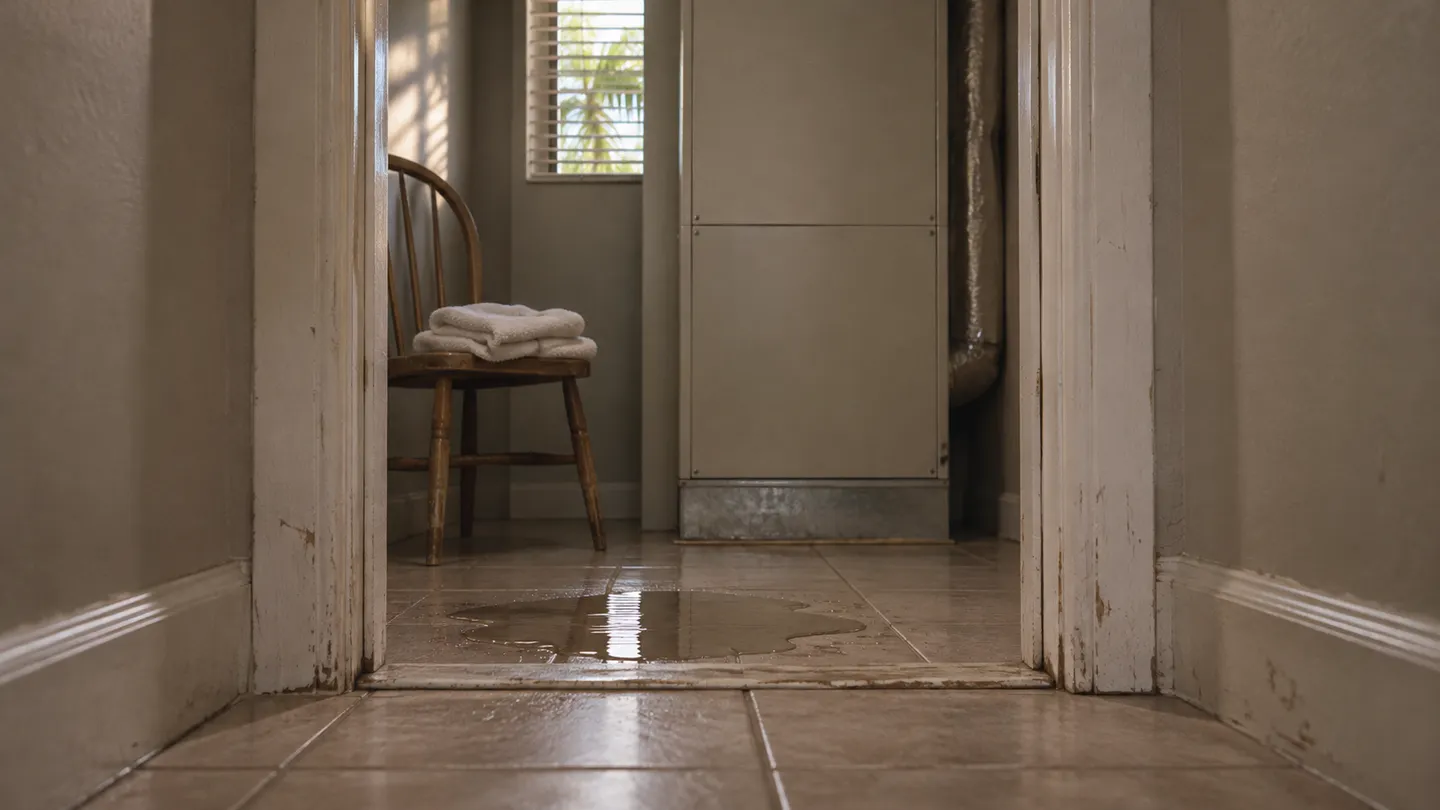
You step in it with one sock. That’s how you find out. Not from the thermostat. The thermostat still says 74, like it was nowhere near the scene.
If your central AC is leaking inside, switch the system off at the thermostat if you can reach it safely. Don’t keep running it to see how bad the leak gets. If water is near electrical equipment, keep clear and get professional help rather than reaching into the unit.[4]
The water is normal. The floor is not.
In cooling mode, the indoor coil pulls moisture out of the air. A pan catches that water and a drain line carries it away. You’re not supposed to see what happens in between.[4]
- A backed-up drain. Water can collect faster than it can leave. Once it overflows, the floor gets a job it wasn’t built for.[4]
- A damaged drain pan. The line can be clear and the pan can still leak. A puddle doesn’t tell us which one it is.[4]
- Ice that melted. A frozen coil can leave water behind as it thaws. If you saw ice before you saw the puddle, mention that. Don’t chip it off.[4]
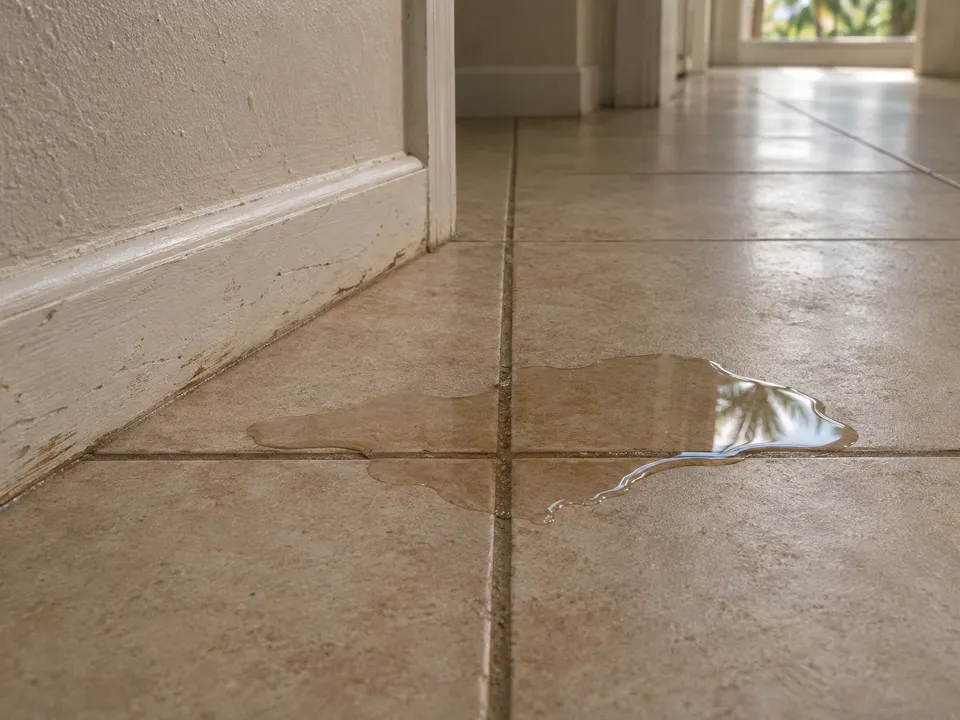
Tell us where it started
“Water by the AC” is enough to make the call. If you can safely see more without opening anything, tell us which side of the cabinet the water is on, whether it first showed up while the system was running or after it stopped, and whether the air had stopped feeling cold. Take a picture from dry ground if you want. We’re more interested in the first wet spot than the size of the puddle after it spreads.
Water beside the unit doesn’t prove it came from the unit. If the ceiling or wall is wet too, say that. We check the equipment for HVAC-related causes; there’s no point clearing a drain and sending you back to a plumbing leak.[1]
If you’ve found water around the indoor unit, leave the system off and request AC repair in South Florida. Tell us what the AC was doing before your sock found out.[1][4]