05 / Everybody Remembered the Heat Button on the Same Night.
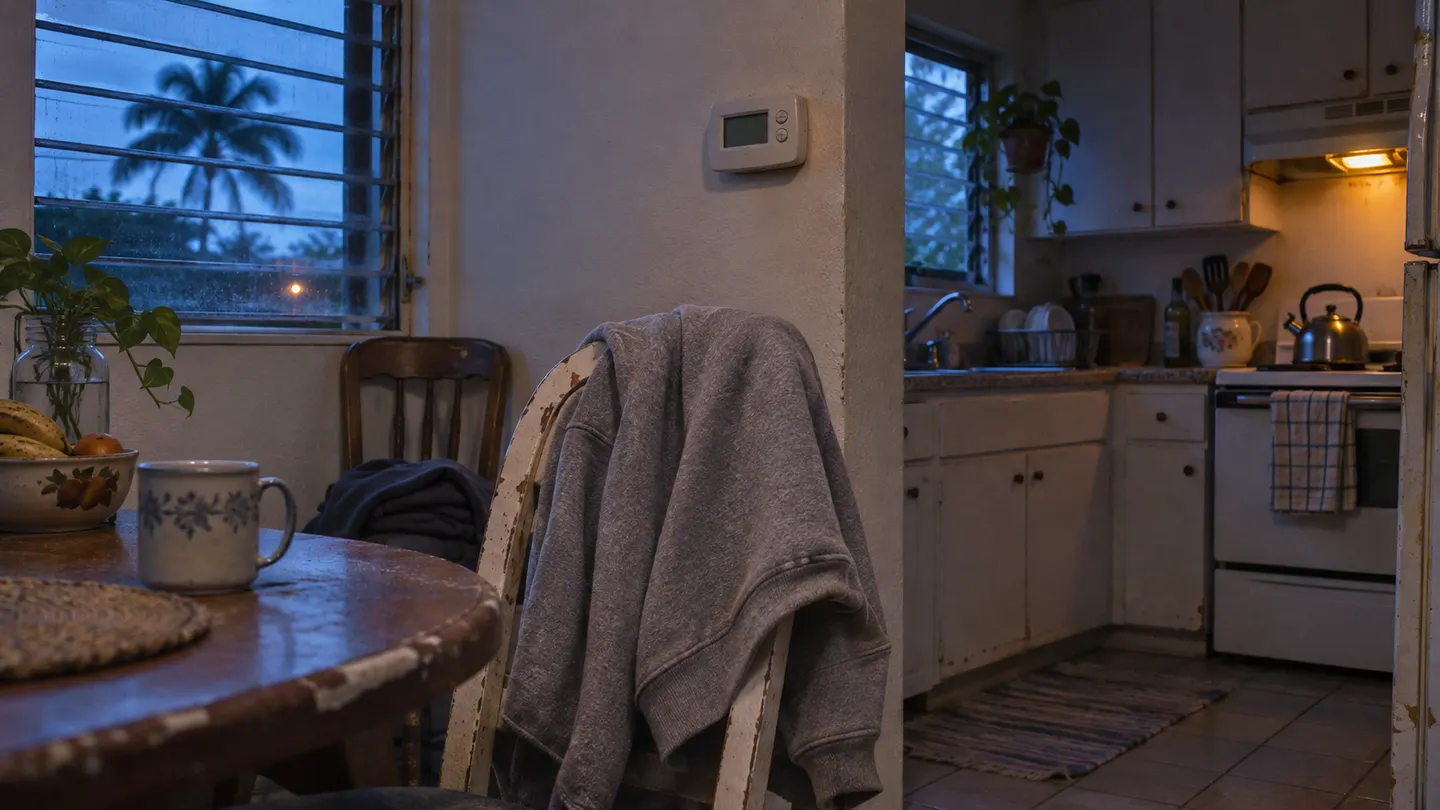
There’s a sweatshirt on the back of every chair. The house sounds the way it did in July. The fan comes on. The kitchen is still cold. Somebody asks if the heat is on, and you say yes because you can hear it.
You can hear the fan. That’s what you know.
First, make sure the thermostat is asking for heat
Set the thermostat to Heat and set the temperature above what the thermostat says the room is now. Then watch the actual room reading, not just the number you set. If the fan comes on but the reading keeps falling or never gets to the set temperature, tell us. If nothing comes on at all, tell us that instead. It’s a different symptom.[3]
The fact that your AC worked all summer is useful history. It doesn’t tell you whether the equipment is responding correctly in heating mode tonight.[3]
The air at the vent isn’t the whole story
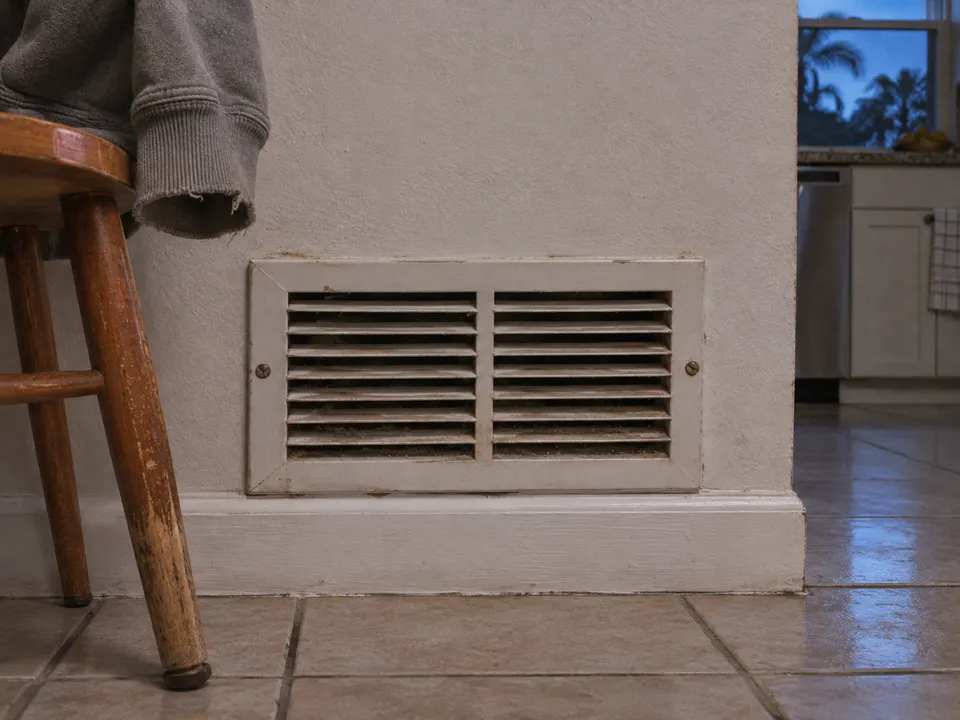
A heat pump doesn’t necessarily blow air as hot as a furnace does. If the air feels cooler than you expected but the room is steadily warming, that’s different from a fan running while the house gets colder. Put the back of your hand under the vent once, then look at the room temperature again. Your hand doesn’t have to sign off on the repair.[3]
If you see Aux Heat, note when it comes on and whether it stays on longer than usual. That’s information for the technician, not a verdict. Tell us whether the heat is failing everywhere or whether you’re only cold in the same room you couldn’t cool in July.[3]
Give us the order things happened in
“I switched it to Heat. The fan ran a few minutes. The thermostat stayed at 65.” We can work with that. It beats “the heat is weird,” although we take that call too.
If the house isn’t warming, explore heating repair in South Florida. We check what the thermostat asks for, what the equipment does in response, and whether the air is reaching the rooms it’s supposed to.[3]