The House Is Cold. The Sheets Are Damp.
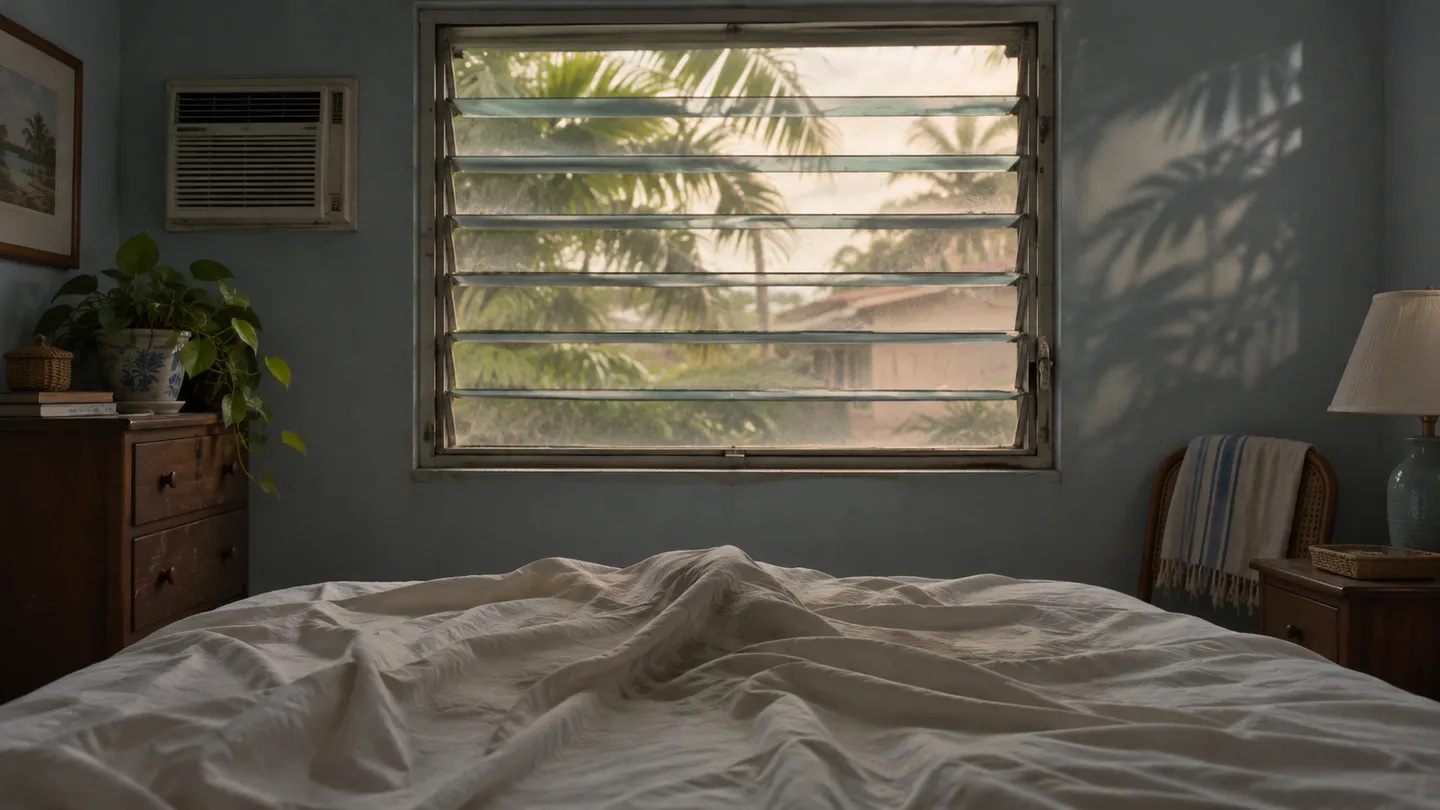
The thermostat says 72. You turn it down to 70 because the sheets feel damp. Now you’re cold under damp sheets. That’s the only thing you changed.
We get this one in South Florida: the AC is running, the house is cold, and the bedroom feels like somebody left a wet towel in it. Sometimes somebody did. Sometimes the AC is getting the temperature down without taking enough moisture out of the air. A thermostat reading alone doesn’t tell you which job got done.
Why your house can feel humid with the AC on
When the AC runs, moisture from the air can collect on the cold indoor coil and drain away. If the system shuts off soon after it starts, it may cool the room without running long enough to remove much moisture. That’s one reason an oversized AC can leave you cold and clammy. Short cycles are a clue. They’re not proof the unit is too big.[1][2]
Moisture also comes from places the thermostat has never been. The shower. The stove. Humid outdoor air coming in around a door. Sometimes it’s a leak, especially if one spot stays wet while the rest of the room feels fine. We look at cooling cycles and drainage. We don’t blame the AC for water coming through the ceiling.[2][3]
Get a number from the room, not the hallway
Put a small humidity meter in the room that feels damp. Write down the temperature and relative humidity when you notice the problem. Do it a few times. Compare it with a room that feels normal. The EPA recommends keeping indoor relative humidity below 60% if possible, ideally between 30% and 50%.[3]
What we’d want to hear when you call:
- Where: Just the back bedroom, or the rest of the house too?
- When: After showers, after rain, or all day with the AC on?
- What changed: Is the system starting and stopping more than usual? Is there water near the indoor unit, a damp spot on a wall, or just that feeling in the sheets?
“A little damp” could be anything. “The bedroom reads 64% by bedtime, the hallway doesn’t, and the AC keeps starting and stopping” gives us somewhere to look. If you find an active leak, deal with the water source rather than waiting for the AC to dry it out.[3]
Tell us where it feels damp
If the house keeps feeling clammy, Aircon Artists can check the HVAC side: how the system runs, how air moves through the rooms, and where the condensate goes. If what we find points away from the equipment, we’ll tell you that, too.[2]
Explore indoor air quality services in South Florida · Request HVAC service
Sources
[1] ENERGY STAR, HVAC Quality Installation